
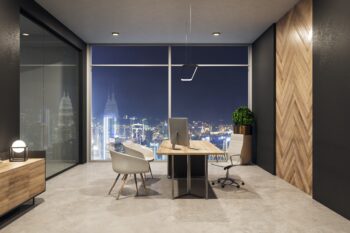
You understand the significance of creating an environment that fosters productivity, comfort, and professionalism. The design and ergonomics of your law firm’s workspace play a crucial role in enhancing employee satisfaction, promoting collaboration, and leaving a positive impression on clients.
1. Strike a balance between functionality and aesthetics
When designing your law firm’s workspace, it’s essential to strike the right balance between functionality and aesthetics. While a visually appealing office can create a positive impression, functionality should remain a top priority. Ensure that the layout and furniture choices contribute to efficient work processes and facilitate seamless communication among team members.
2. Optimal space planning:
Effective space planning is the foundation of a well-designed law office. Consider the workflow of your firm and arrange workspaces to support collaboration while allowing for focused individual work. Designate separate areas for client meetings, team discussions, and private workspaces to accommodate various tasks.
3. Comfortable and ergonomic furniture:
Lawyers and staff often spend long hours at their desks, making ergonomic furniture a necessity. Invest in ergonomic chairs that provide proper lumbar support and adjustable features. Adjustable-height desks can also promote better posture and reduce the risk of discomfort or injury.
4. Adequate lighting
Good lighting is crucial for productivity and comfort. Natural light is ideal, as it boosts mood and reduces eye strain. If natural light is limited, incorporate well-placed artificial lighting that’s both functional and aesthetically pleasing.
5. Privacy and acoustics
Lawyers frequently handle sensitive information, making privacy a key consideration. Incorporate sound-absorbing materials or dividers to create private spaces for confidential discussions. This can also help reduce noise levels and distractions, contributing to a focused work environment.
6. Technology integration
Seamless technology integration is essential in modern law firms. Ensure that workstations are equipped with proper cable management systems, charging stations, and connectivity options. This promotes efficient communication and supports the use of essential legal software.
7. Branding and professionalism
Your office design should reflect your firm’s brand and values. Incorporate your firm’s logo, colors, and design elements to create a cohesive and professional look. This consistency extends to your reception area, where clients form their first impressions of your firm.
8. Thoughtful reception area
The reception area serves as the first point of contact for clients. Make it welcoming and comfortable, with comfortable seating, informative materials, and friendly staff. A well-designed reception area sets the tone for a positive client experience.
9. Collaboration zones
Lawyers and support staff often need to collaborate on projects. Create designated collaboration zones equipped with technology, whiteboards, and comfortable seating. These spaces encourage idea sharing and teamwork.
10. Flexibility and adaptability
Law firm needs can evolve over time. Design your workspace with flexibility in mind, incorporating modular furniture and adaptable layouts that can accommodate changing requirements.